










Boston Scientific Foundation Europe supports digital innovation to advance women’s health
In regions where traditional healthcare systems have difficulty reaching rural or underserved populations, women face significant barriers to accessing healthcare. From limited screening services to shortages of trained health professionals, gaps in infrastructure continue to affect the quality and availability of care.1
Digital health tools are helping bridge these gaps; mobile technology, artificial intelligence and digital decision-support tools are enabling new approaches to diagnosis and care delivery.
Boston Scientific Foundation Europe (BSFE) supports non-profit organisations developing these solutions. By funding digital health initiatives that improve access to care, the foundation helps innovators to address areas of greatest unmet need and bring life-changing services closer to communities.
Around International Women’s Day each year there is renewed attention on women’s health challenges worldwide. Through its partnerships with non-profit organisations, BSFE is supporting projects that improve prevention, diagnosis and maternal care for women in underserved regions.
Advancing cervical cancer detection with smartphone technology
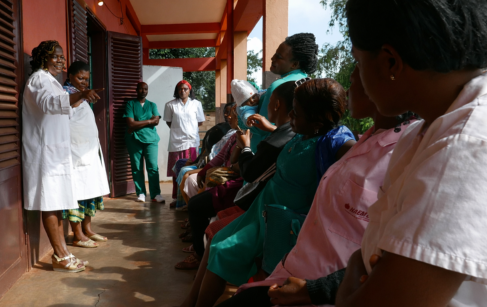
One area where technology can overcome gaps in service provision is cancer screening. Although cervical cancer is largely preventable and curable if detected early, it remains the fourth most common cancer among women globally with one of the highest rates of incidence and mortality in sub-Saharan Africa. In 2022, about 94% of the 350,000 deaths caused by cervical cancer occurred in low- and middle-income countries, where routine screening programmes are often unavailable.2
To help address this gap, BSFE recently announced a new partnership with the EssentialTech Centre, based at École Polytechnique Fédérale de Lausanne (EPFL), to support the advancement of smartCervix, a smartphone-based screening solution designed to improve early detection of pre-cancerous lesions.
The system helps health workers identify suspicious lesions more accurately and supports the same-day “test–triage–treat” approach recommended by the World Health Organization (WHO), which can significantly reduce loss to follow-up in low-resource settings.
BSFE’s grant will support the next stage of the EssentialTech Centre’s work as the solution moves from research towards real-world implementation. The project will include a pilot phase in Cameroon focused on women of reproductive age that will support capacity-building for local nurses and midwives. At the same time, EssentialTech will engage health authorities, clinicians and other key stakeholders to understand how to support sustainable adoption of the technology in practice, with the longer-term goal of scaling the solution across sub-Saharan Africa.
Strengthening maternal care through digital health
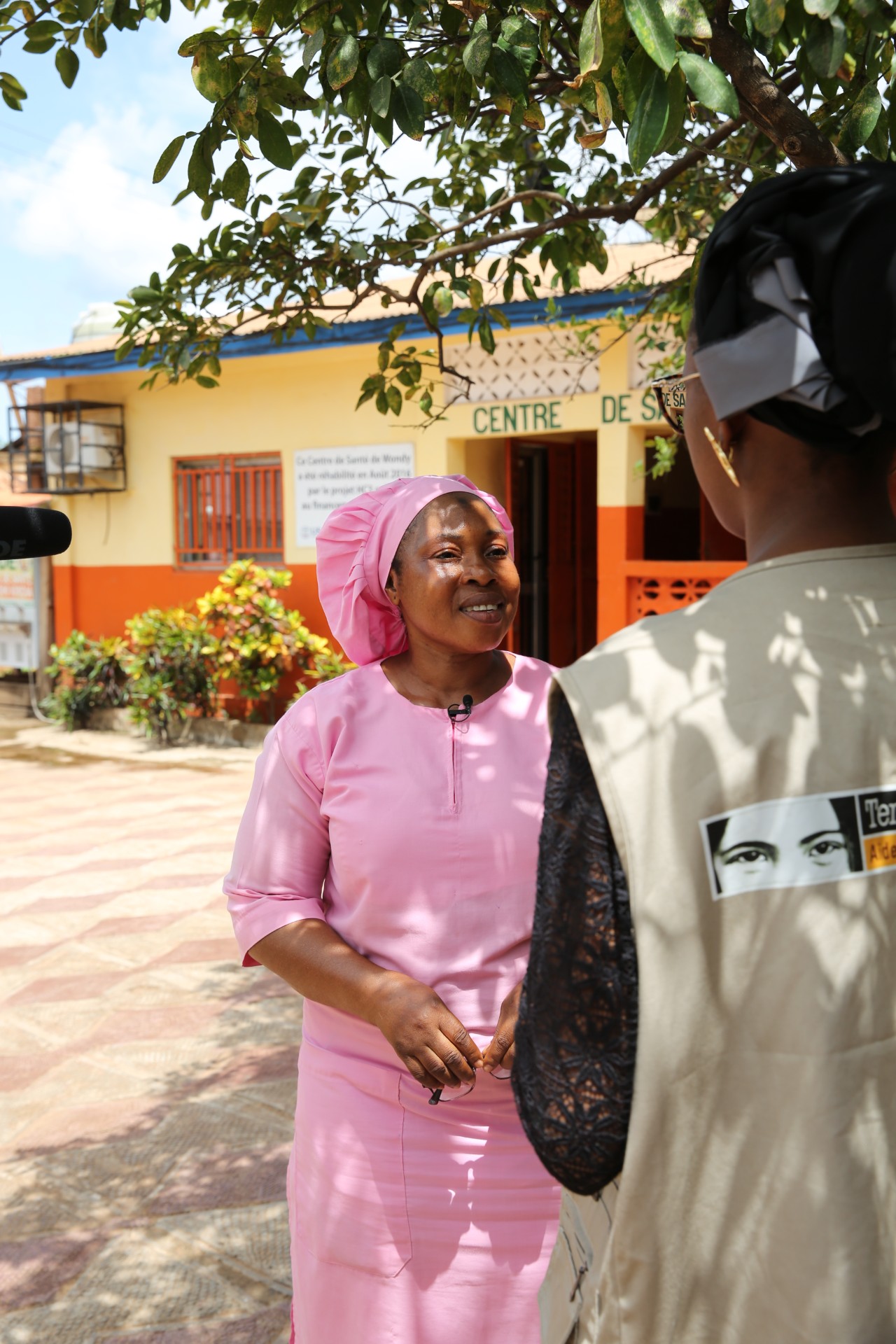
BSFE has also seen the impact of digital innovation in women’s health through its long-standing partnership with another Swiss organisation, Terre des hommes. The organisation developed the ‘She Decides’ Electronic Maternity Consultation Register, a digital platform supporting health workers across the continuum of maternal care in Guinea.
During its pilot phase across 15 communities in Guinea, the project trained more than 150 health workers and supported more than 30,000 women, helping improve monitoring during pregnancy, strengthen clinical decision-making and enhance the quality of care from prenatal consultations through childbirth and postnatal follow-up.
Building on this success, BSFE is continuing its support for the next phase of the initiative. Terre des hommes will expand the digital platform to additional health centres while also strengthening the integrated response for survivors of gender-based violence (REDIR - GBV). The programme will introduce a digital version of the WHO Labour Care Guide, providing health workers with real-time guidance during childbirth. Combined with community awareness activities promoting maternal health and the prevention of gender-based violence, the initiative aims to improve safety for mothers and newborns while strengthening local health services.
“Thanks to loyal partners like BSFE, Terre des hommes can implement strategic, multi-year programmes with greater impact,” said Marieke van Hal, Partnerships Manager, Terre des hommes, Switzerland. “Together, we are protecting the health, dignity and lives of women and girls in Guinea.”
Digital innovation is increasingly helping close critical gaps in women’s healthcare. By supporting organisations developing practical, scalable solutions, BSFE is helping expand access to essential healthcare and improve outcomes for women where the need is greatest.
“When we see a solution that has the potential to address significant care gaps in underserved communities, we look closely at how our support can help bring it closer to large-scale, sustainable deployment,” said Simonetta Balbi, president of Boston Scientific Foundation Europe. “Through partnerships with organisations like EssentialTech Centre and Terre des hommes, we are supporting digital innovations that will improve health equity for women.”
About Boston Scientific Foundation Europe
Boston Scientific Foundation Europe is a non-profit organisation that supports well-being through digital solutions. Addressing issues of public interest, the foundation funds initiatives from European non-profit organisations that help prevent or manage diseases. Established in 2018, BSFE is headquartered in France and funded solely by Boston Scientific. For more information, visit www.bostonscientific.eu/foundation, LinkedIn, or Facebook.
References:
1 World Health Organization. Universal Health Coverage fact sheet. https://www.who.int/news-room/fact-sheets/detail/universal-health-coverage-(uhc). Last accessed 9th March 2026.
2 World Health Organization. Cervical Cancer fact sheet. https://www.who.int/news-room/fact-sheets/detail/cervical-cancer. Last accessed 9th March 2026.
3 Bigoni J, Gundar M. Tebeu P-M, et al. Screening in sub-Saharan Africa: A randomised trial of VIA versus cytology for triage of HPV-positive women. Int J Cancer. 2015 Jul 1;137(1):127-34.