









NICE recommends cryoablation as a treatment option for kidney cancer in the NHS
People with advanced renal cell carcinoma (RCC), the most common type of kidney cancer, could benefit from a minimally invasive therapy called thermal ablation, according to new guidelines from the National Institute for Health and Care Excellence (NICE)1. NICE provides evidence-based recommendations to improve health and social care in the National Health Service (NHS) in England and Wales.
The new guidelines follow renewed national efforts to improve access to the latest evidence-based cancer therapies and treatment outcomes. In reviewing safety, efficacy and cost data, NICE found that thermal ablation is associated with fewer short-term complications than surgery and better kidney function.
One form of thermal ablation is cryoablation. The procedure uses extreme cold to target cancer tumours while sparing healthy surrounding kidney tissue.
A recent study in the Cardiovascular and Interventional Radiology Journal found cryoablation to be as effective as robot-assisted surgery in treating the most common type of kidney cancer.2
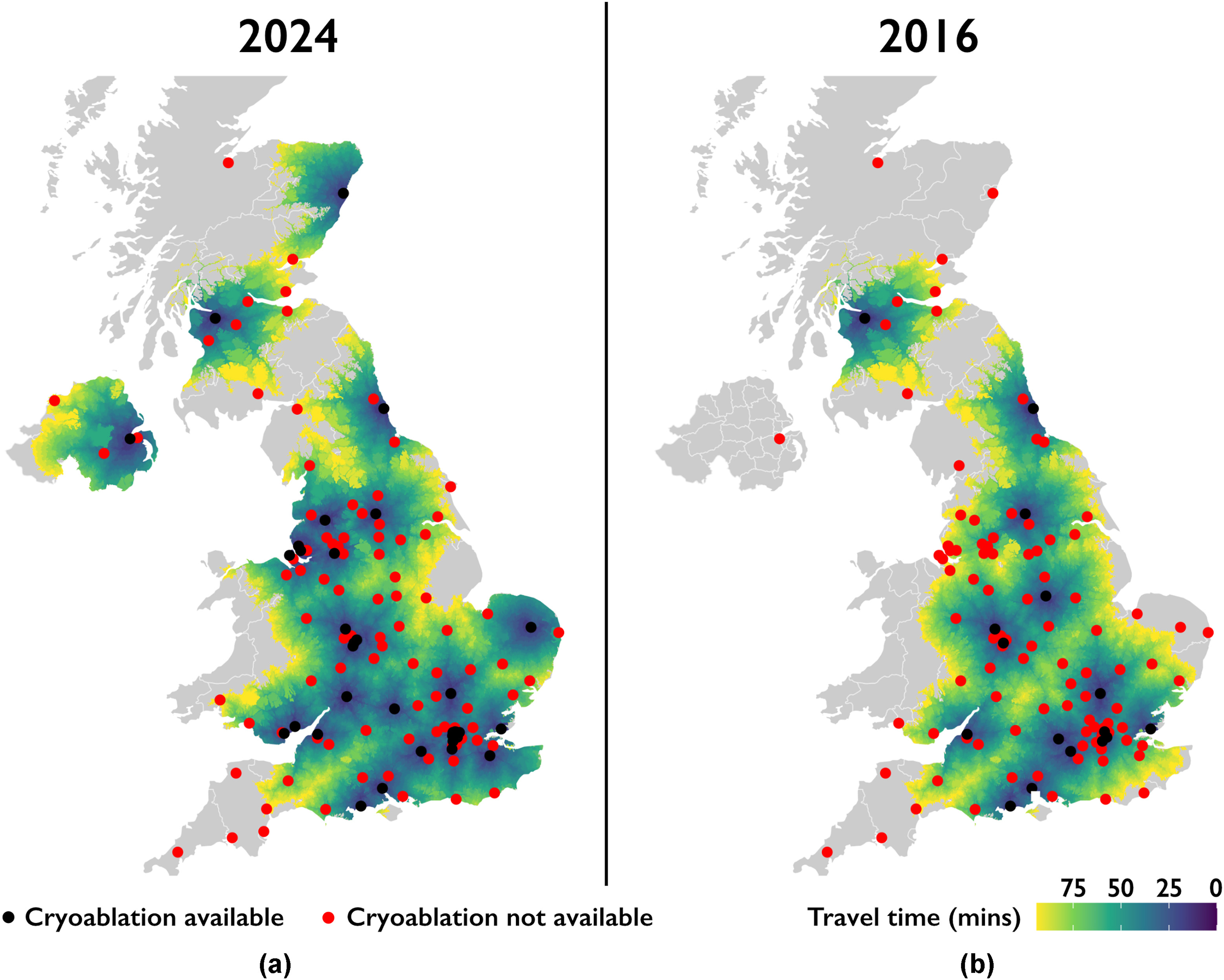
Cryoablation and quality of life in kidney cancer patients
For 75 year-old David, from Alderney, cryoablation helped him overcome kidney cancer with minimal side effects.
“Given my circumstances and the previous procedures that I had, cryoablation was very much recommended as the most suitable candidate for treating my kidney cancer,” he said. “The procedure itself made very little impact on my daily life. I just recovered ever so quickly.”
During his procedure, Dr. Alex King, consultant radiologist at University Hospital Southampton, used a CT scanner to guide needles or cryoprobes into the tumour, limiting the impact to surrounding anatomy.
“We can put them very precisely so that they match the shape and the size of the tumour and only destroy the tumour and a small cuff of normal kidney tissue,” King said.
Improving cancer outcomes and survival rates in the UK
Kidney cancer is the sixth most common cancer in the UK, with around 13,900 new kidney cancer cases in the UK every year (2017-2019).5 Incidence is also rising in younger adults, highlighting the need for early detection and treatment access.
Among European countries, the UK has one of the lowest 5-year survival rates for kidney cancer6 with worse outcomes for people from underserved communities. But the NHS’ Cancer Care Plan7 sets a goal for 75% of people diagnosed with cancer to survive for five years or more by 2035.
“Health inequalities remain stark as people from working class communities and more deprived areas have lower survival outcomes for kidney cancer in the UK7,” said Kathleen Van Vlierberghe, vice president of Peripheral Interventions for Boston Scientific in EMEA. “This guideline recognises the value of cryoablation as part of the treatment landscape. With cancer care costs escalating, it is vital to reduce pressure on the NHS: cryoablation offers shorter recovery times compared with open surgery.”
2 New study finds cryoablation is an effective and more affordable option for treating kidney cancer
3 IO1-UK: a cross-sectional study to re-evaluate the provision of interventional oncology services across the United Kingdom
6 Data from 2016-2018. Incidence of kidney cancer in the UK - Kidney Cancer UK (last accessed February 2026).