










Remote technologies support access to cryoablation in South Africa
The use of remote technologies — including Boston Scientific’s Smart Glasses — is expanding access to minimally invasive care. One example is the introduction of cryoablation for patients with bone tumours (known as sarcomas) in South Africa.
Offering patients with bone tumours a less invasive alternative to surgery
Treatment of bone sarcomas typically depends on tumour type and location. Surgery is often the first line treatment and may involve partial or complete removal of the affected bone or joint. In advanced cases, amputation (partial or full) may be required if the cancer has spread to surrounding nerves and blood vessels.
Dr. Jenny Hauptfleisch, a radiologist at Morton and Partners Radiologists in Cape Town, is part of a regional sarcoma multidisciplinary team (MDT) that discusses patients with bone sarcomas. Drawing on experience gained through international training, she recognised an opportunity to treat patients using cryoablation, a minimally invasive procedure that avoids the need for open surgery, which may help reduce recovery time and lower the risk of complications. Cryoablation was not available as a treatment option in Cape Town, so Dr. Hauptfleisch was keen to find a way to introduce the procedure.
Bringing experts into the operating room from thousands of miles away
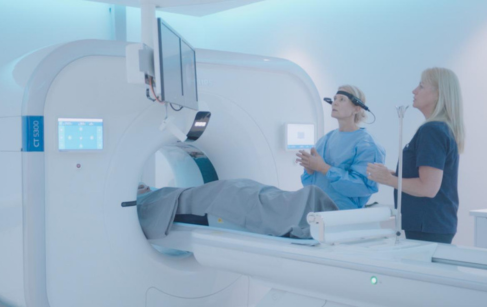 Dr. Hauptfleisch connected with Dr. Matthias Fürstner, a leading expert in cryoablation based at the Krankenhaus der Barmherzigen Brüder in Sankt Veit an der Glan, Austria, to discuss introducing the procedure in Cape Town.
Using Boston Scientific’s remote technologies, Dr. Hauptfleisch and her team performed the first cryoablation procedure in South Africa, with real-time support from Dr. Fürstner in Austria. Wearing Smart Glasses equipped with a camera, Dr. Hauptfleisch gave Dr. Fürstner an unrestricted, close-up view of the procedure and enabled real-time exchange, learning and collaboration.
“The remote technologies created the experience of having an international expert physically present in the room with me,” said Dr. Hauptfleisch.
“I was able to see the procedure as if through her eyes, it was like I was in the room with her,” concurred Dr. Fürstner.
Not only did Dr. Hauptfleisch feel supported during the first cryoablation procedure, the approach also enabled colleagues in the operating room to observe and learn in real time, gaining exposure to new techniques as part of a shared clinical experience. “It was a great example of clinical training, knowledge exchange and the introduction of advanced techniques across borders,” said Dr. Hauptfleisch.
Remote technologies enhance patient care
The use of remote technologies to treat bone sarcomas with cryoablation means an improved patient experience. Patients may have a quicker recovery and a reduced risks of complications compared to surgical treatment.
You can hear more about Dr. Hauptfleisch and Dr. Fürstner’s experience of remote technologies by watching this video:
To find out more about the remote support offered by Boston Scientific, visit our website: Remote support - Boston Scientific